Las Hoyas Site
A world-renowned site
Address
The Deer
GPS
40.0564088, -1.8512278

The Las Hoyas Site: A Window to the Past of Life on Earth
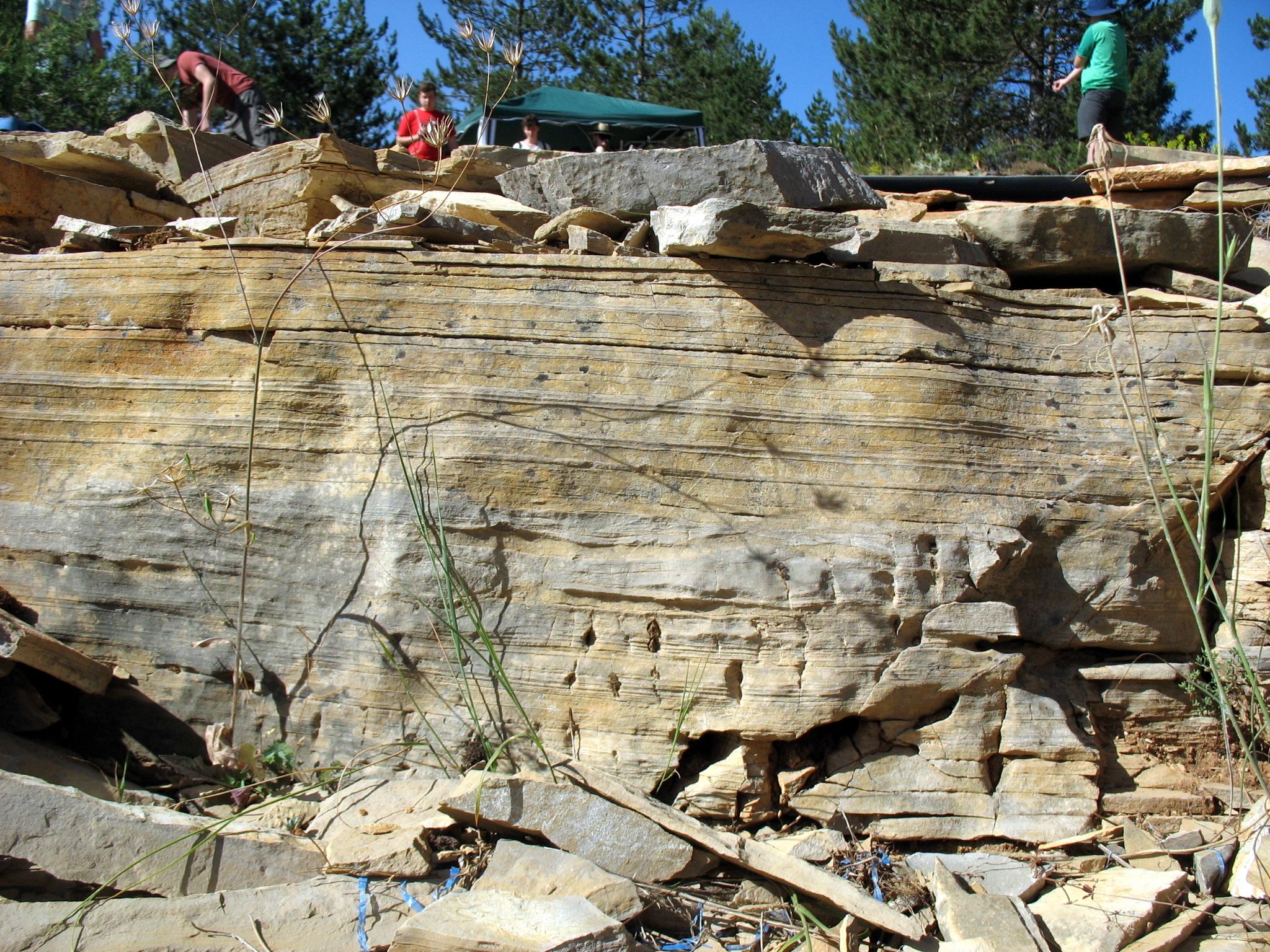
In the heart of the Serranía de Cuenca, specifically in the municipality of La Cierva, is the impressive Las Hoyas Site, just 20 km from the city of Cuenca. This place is a true treasure for lovers of paleontology and a crucial point for understanding the Early Cretaceous. What makes Las Hoyas especially fascinating is the exceptional degree of conservation of the fossils it houses, making it a unique example of Mesozoic era deposit, specifically from the Barremian period, which spans from 125 to 110 million years ago.
A Journey to a Remote Past
The fossils that have been discovered in Las Hoyas are key pieces to unravel the mystery of the origin of animals and plants in their original ecosystem. The importance of this paleontological record can be compared with other world-renowned sites, such as Yixian in China, of equivalent age, or Messel in Germany, of more modern age. From the first studies carried out in the 80s to the present, Las Hoyas continues to amaze scientists and lovers of paleontology.
A Powerful Microbiota: Optimal Conservation
The impressive state of conservation of the fossils in Las Hoyas is largely due to the microbiota action. This phenomenon has allowed many forms of life from that remote period to be preserved intact. The great diversity of fossils found is attributed to the richness of ecosystems present in the wetland regions, like what Las Hoyas was in the past, which makes it a highly relevant element in our heritage and a global reference point.
A Witness to a Biological Revolution
To understand the importance of the Las Hoyas fossil record, it is essential to consider that the Early Cretaceous marked a revolution in the history of life on Earth. During this period, spanning 150 to 125 million years ago, the plants and animals that dominate our planet today first emerged and diversified. Las Hoyas becomes a natural laboratory that allows us to explore when and how this transformation that revolutionized the world's biodiversity took place.
Cultural and Natural Heritage
Due to its immense value, Las Hoyas was declared Asset of Cultural Interest in 2016, and the fossils that have been discovered at this site are on display in the Paleontological Museum of Castilla-La Mancha (MUPA), in Cuenca.
Journey to the Past: Climate and Biodiversity
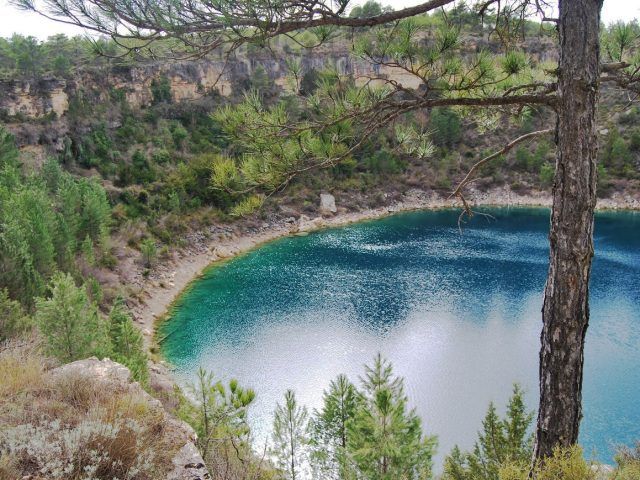
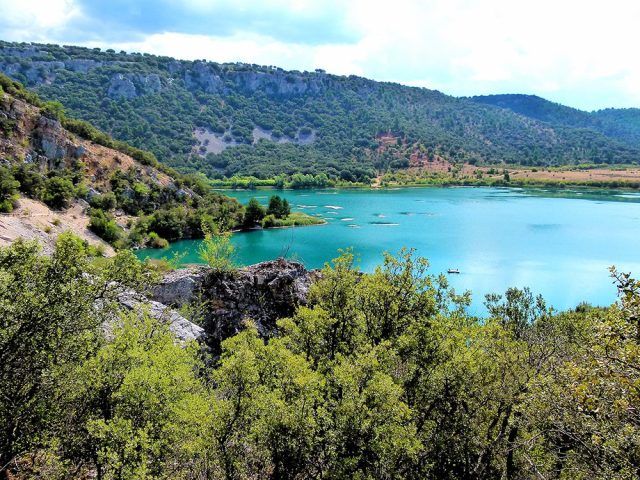
More than 30 years of research have allowed us to reconstruct the ancient landscape of Las Hoyas. A scenario of wetland with a subtropical climate, composed of a network of lakes and ponds of carbonated water, something very similar to what we find today in the Lagunas de Ruidera Natural Park in Ciudad Real. The Barremian climate was characterized by the alternation of a rainy season and a dry season, typical of this subtropical latitude.
These climatic conditions influenced the rich diversity of living beings that inhabited the area. Las Hoyas represented a meeting point between terrestrial and aquatic organisms, with different adaptations depending on the availability of water. The community of species was a mixture of basal groups, whose relatives had roots in earlier periods of the Jurassic, along with other more modern groups that gave rise to current organisms.
In short, Las Hoyas is a unique window into a distant past and an invaluable tool for understanding the biological changes that shaped our planet's biodiversity. If you are a researcher or student and want to visit it check here.
Discover unforgettable scenery and natural gems, every corner reveals the authenticity of the Serranía de Cuenca. Here you will find a selection of places you cannot miss.