It is about one of the smallest towns in the Serranía Conquense, with only 88 registered inhabitants, but a must-see. It concentrates within its territory an endless number of enclaves of sublime beauty and essential places for those who want to get to know the Serranía Conquense.
Not in vain are there many tourist accommodations and bars and restaurants that invite the traveler to make a mandatory stop, and even to use this town as a base of operations from which to explore the rest of the mountain range.
Nail and its surroundings
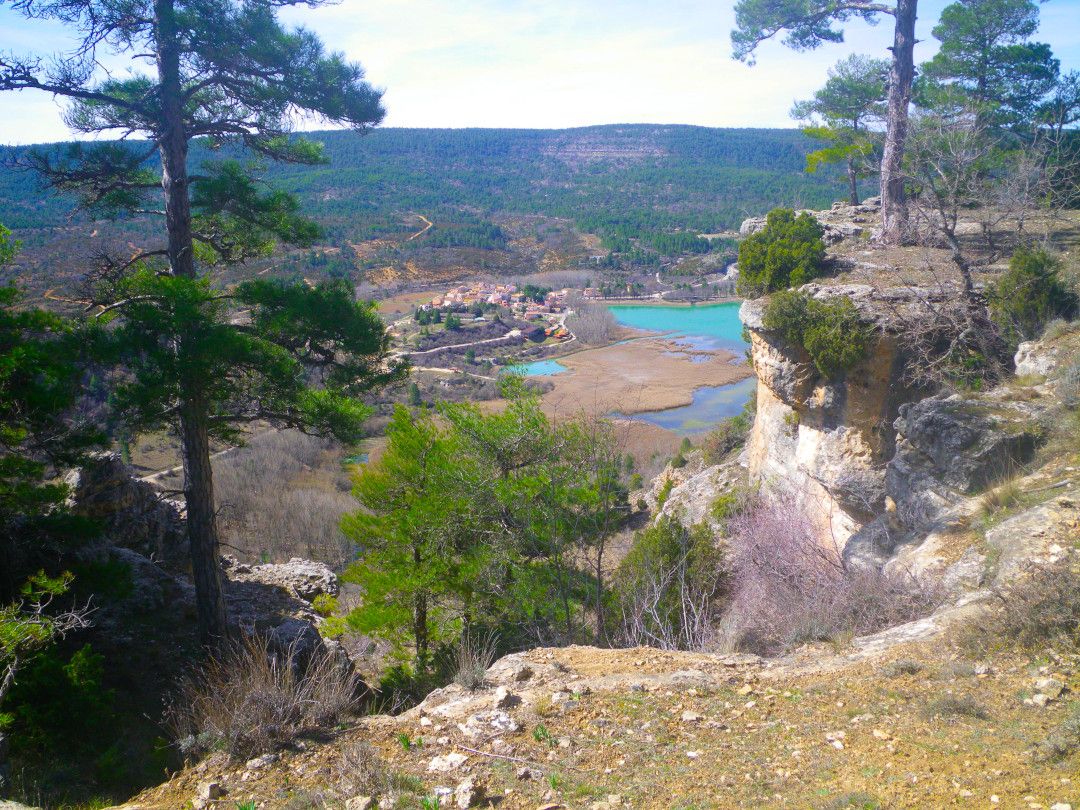
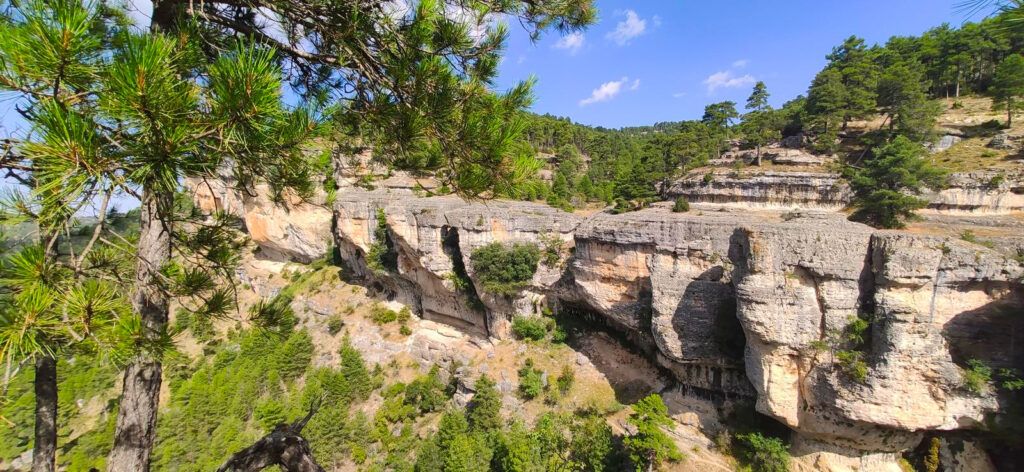
Nestled between huge limestone rock walls that flow from the so-called millstones towards the calm lagoon that bathes the streets of the town. It has one of the most famous trails in the entire Serranía, known as “The Staircase and the Line”, is the PR-CU 37, which will take us around the Laguna de Uña reaching the height of the molars to give us impressive views, which are the same as those observed by the numerous vultures that we will find peering over the cliffs, sometimes just a few meters above our heads, other times below.
And the impressive rock walls that dominate the landscape also shape the personality of the inhabitants of Uña, and perhaps for this reason we can find a small but beautiful curiosity along the path, the hermitage of “The Virgin of Espinar”, located in a corner of a rock, a little hidden, but highly revered by its countrymen, who constantly adorn it with flowers.
To ascend to the Uña Viewpoint, where we can have an impressive perspective of the whole town and its enclave, we will have to pass by the Regional School of Fishing, in the Rincón stream where courses are sometimes organized for those who want to start in the art of river fishing.
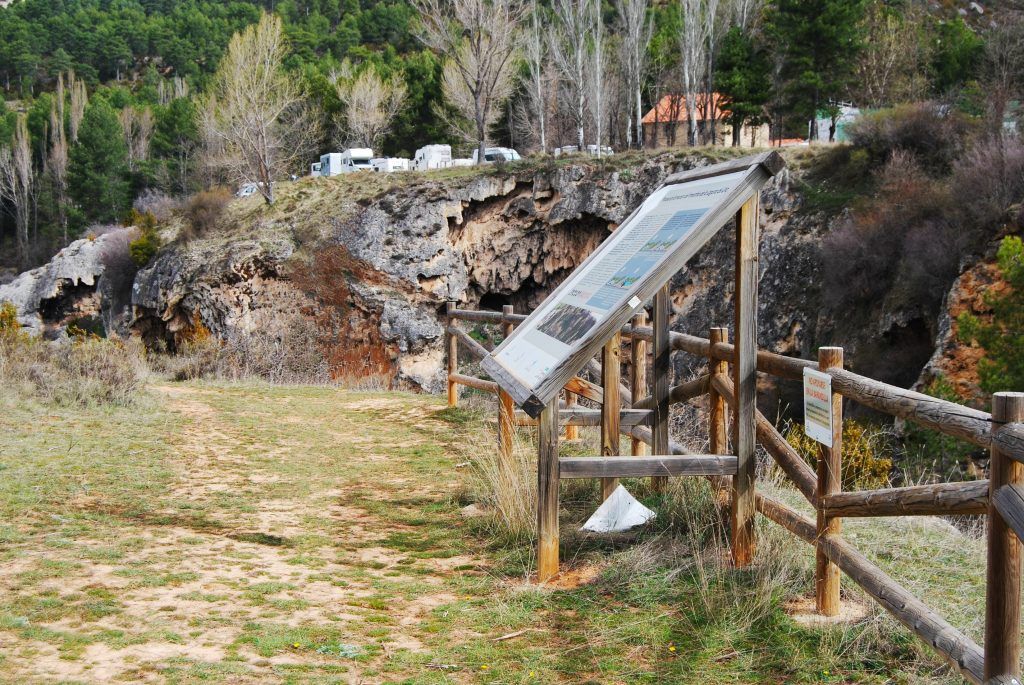
A little further up the stream a small fish farm located in the beautiful enclave of Rincón de Uña works hard to return to the rivers of the Serranía the brown trout Once inhabiting every corner of the country, trout now need extra efforts to recover their once abundant presence due to habitat loss, river discontinuities caused by dams and weirs, and the warming of waters linked to global warming. Operating since 1974 and managed by the Regional Government of Castilla La Mancha, The fish farm opens its doors to tourists on occasion so they can learn about its work up close.
Uña Lagoon, calm waters full of life
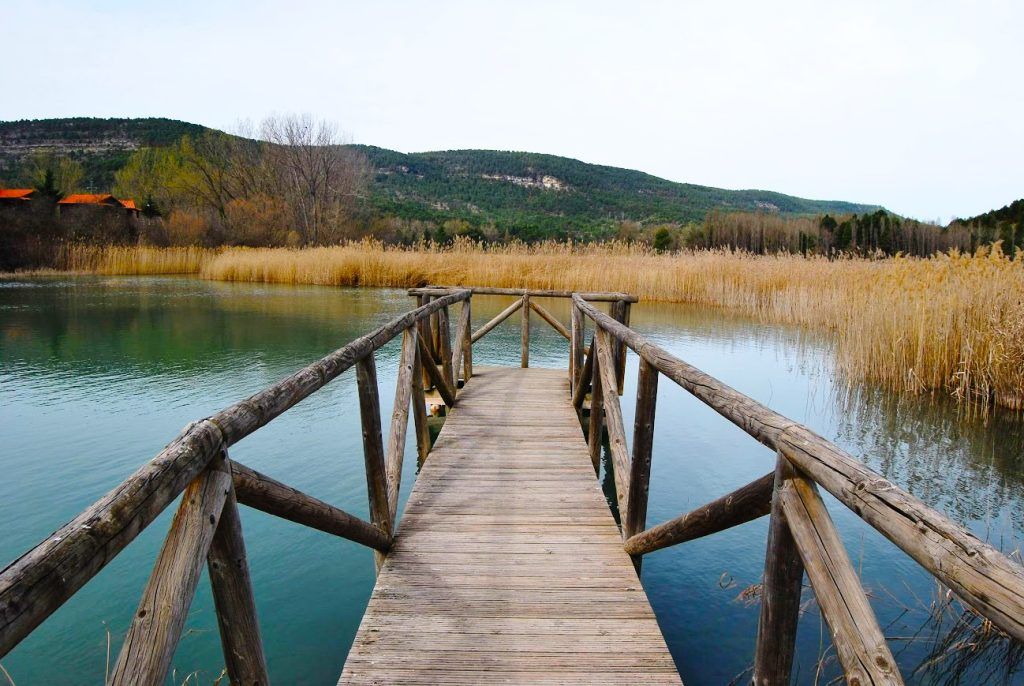
Presiding over the landscape ensemble is the lagoon, which serves as refuge to a multitude of birds such as ducks, moorhens, black-winged stilts, herons and little egrets. The luckiest ones have also been able to spot some elusive otters in its waters. The Uña lagoon It is formed by a wall of tufaceous rock that retains the waters of the Rincón stream and the Socarrado ravineSurrounding it we have a path accessible to the less athletic, simple but beautiful, it has several walkways that allow us to enter the lagoon, and a hiding place on one of its sides to observe the birds without being seen.
Its waters are prohibited for bathing, since a large number of birds breed and nest on its banks., so we are faced with a lagoon ecosystem of special importance that invites us to observe its many inhabitants.
Wood, the great resource of the Serranía
The history of this small town is linked to the timber harvesting of the extensive pine forests located in the heights called "las muelas", in this case a cable It covered a difference in altitude of 200 metres over a distance of just over a kilometre. to be able to lower the logs of the so-called “Wooden Mill”. To give us an idea, we find a recently built structure that commemorates the 100 years of its commissioning. cable designed by Gustavo Torner, father of Jorge Torner (emblematic artist of the abstract art generation in Cuenca).
It is about the wood unloading station, a sample of the vast industrial heritage linked to the wood of the Sierra. Thanks to the efforts of one of the associations that are most concerned with maintaining and recovering the natural and historical heritage of the area, Esparvel. A huge wooden structure that recalls the old unloading station for the logs that were lowered from the heights by flying cables to lower them to the height of the lagoon, in one more of its stops on this intense Journey through mountains, cliffs and rivers towards the sawmills of Cuenca and the east.
Another part of the heritage linked to industrial activity, both energy and wood, is The canal, which was built in the 1920s, runs for approximately 12 kilometres. perched on the top of the hillside, leaving the Júcar at its foot. The construction of this canal forced the water level of the lagoon to rise, drying up The Tobaceous Waterfall of Uña, one of the most impressive and beautiful in the area, which can be admired from the Uña Travertine ViewpointThis waterfall will once again recover the water that gave it life thanks to a project to redirect the waters of the Rincon stream.
The channel You can travel to the town of Villalba de la Sierra, thanks to the railings that accompany it. This route, although it is not within the approved routes that the Mountain Sports Federation throughout the Serranía, it will not leave indifferent those who dare to do it, but remember that it is linear and if you have to return to Uña, it will be by the same path.
Much more to discover
For the caving lovers In the Uña area we find the possibility of visiting one of the most emblematic caves in the area. This serves as an introduction to speleology due to its simplicity, but without detracting from the formations that we find in it. In order to visit the cave, Uncle Manolo's Cave, it is necessary hire one of the many tourism companies asset that will provide us with this visit with all the security and rigor that entering the bowels of the earth requires.
Another of the treasures of this small town is one of the routes that allows us to access the upper parts of the ravines that surround the lagoon, called Route of the cathedrals, immerses us in an infinity of cracks and nooks which, with the help of rustic wooden ladders, will allow us to access the cliffs that look out from a vulture's view over the valley formed by the Arroyo de la Madera, where we can also find one of the pools preferred by the people of Cuenca.
In order to understand the wonderful environment that surrounds us, it is necessary to stop at the uña interpretation center which, overlooking the lagoon, explains and details countless environmental aspects of the area, its history and its traditions.
For the For astronomy lovers, Uña has a space specially designated for visiting at night. and enjoy skies free of light pollution, it is a viewpoint that simultaneously looks at the sky and the lagoon, which on cold winter nights gives us a perfect mirror to observe the firmament without bending our necks.
A few kilometers from the town, in direction to Tragacete, The waters of the Uña reservoir also give us the opportunity to enjoy exceptional bathing corners, with water noticeably warmer than in the rest of the cold rivers of the Sierra, canoeing or exploring the wonderful pine forests that surround it. Deer, fallow deer and roe deer often come down to the plain between the reservoir and the town of Uña where they graze peacefully both at dusk and at dawn.
There are still some corners of this small but beautiful town to mention, but something must be left so that whoever enters its streets, mountains, forests and corners will be pleasantly surprised.